Siempre recuerdo (hoy inclusive, por eso escribo esto) mis momentos de ingreso al mercado profesional del ilustrador y artista del comic.
Recuerdo las cosas que más me quedaron marcadas en la memoria. Y una de ellas es el muestreo de los trabajos a distintos profesionales. Buscaba un apoyo moral. Buscaba obviamente una mano para entrar al mercado. Buscaba una oportunidad!
Pero no la tuve. Recibí de todo menos oportunidades. Recuerdo al que mejor me trató fue el querido y ahora desaparecido Carlos Meglia. Un dibujante como pocos. Atesoro mucho el arte que ha hecho porque me gusta todo. Absolutamente todo. Y tuve la oportunidad de que me tomara como amigo... Fui yo quien decidí después ir por otros rumbos. Estaba medio grande de edad para pasar por todo el camino del pupilo. Ganas me sobraban pero no paciencia.
Eso fue lo mejor. Los otros artistas con quien pude consultar mi obra eran tan grandes o mucho más inclusive que Carlos Meglia. Y todos me decían que tenía que ir por otro rumbo, o que esto y que lo otro.... La verdad es que era un bajón tras otro. JAN (dibujante español de Super Lopez) me llegó a decir que me dedicara a otra cosa.
Me deprimió mucho esa etapa y me sentía muy desanimado. Realmente creía que había gente que podía vivir de esto y gente que no (y yo era uno de estos últimos)
Pero después, el tiempo pasó y esos recuerdos como que no me pesaron tanto. Decidí igualmente armar mi portfolio en línea y salir a buscar la moneda. Me mostraba como artista lo más que podía!
Y fui consiguiendo mis clientes. Editoriales independientes y pequeñas empresas eran quienes me pagaban por ese arte casi asqueroso que grandes artistas me habían condenado.
Entonces aprendí la lección: No existen malos dibujantes. No existe un artista que no pueda vivir de la venta de sus obras. Existen -por el contrario- artistas que no encuentran a sus clientes.
Y no los encuentran, obviamente porque no están buscando en el lugar correcto. Yo no se cual es el lado correcto de cada uno. Pude por suerte encontrar el mío y espero que si eres un artista como yo y que se siente de la misma forma que me sentía yo cuando no podía vivir de mi arte, entonces puedas encontrar en estas palabras una luz de esperanza.
miércoles, 9 de mayo de 2012

lunes, 20 de febrero de 2012
John K Stuff: The Best Tools For Cartoonists
The Best Tools For Cartoonists
...if you wanna work for me anyway.
I am starting a couple projects and will be on the lookout for cleanup artists, inbetweeners and maybe animators. What I need from cartoonists and animators are some basic traditional skills.
Here is a quick rundown of the tools I find the most useful:
I am starting a couple projects and will be on the lookout for cleanup artists, inbetweeners and maybe animators. What I need from cartoonists and animators are some basic traditional skills.
Here is a quick rundown of the tools I find the most useful:
CONSTRUCTION
CLEANUP AND INKING
LINE OF ACTION
Silhouettes work in tandem with lines of action to make the clearest possible posing statements.This is the most important one for me. I need artists who can draw solidly and make their characters turn around well. -even when I do stylized retro cartoons, the skill you obtain from an ability to draw well is invaluable: http://johnkcurriculum.blogspot.com/2009/12/preston-blair-lessons-fundamentals-of.html
HIERARCHY http://johnkcurriculum.blogspot.com/2009/12/preston-blair-lessons-fundamentals-of.html
Hierarchy is the greatest tool an artist can use. Construction is just one application of the concept of hierarchy: applicable specifically to the drawing of individual characters within a scene.
 http://johnkstuff.blogspot.com/2009/02/hierarchy-4-using-same-method-for-more.html
But hierarchy is also used in composition, in inking, in background design
http://johnkstuff.blogspot.com/2008/05/more-bg-layout-note-hierarchy-of-form.html

and painting,
 http://johnkstuff.blogspot.com/2008/07/painting-technique-scott-wills.html
in layout, in storytelling - you name it. It means basically that you have a major form or idea that governs the rest of the specific details - all the various levels of details are subject to the larger forms they help describe.
http://johnkcurriculum.blogspot.com/2009/06/hierarchy-forms-within-forms-details.html
Hierarchy is the thing that classic Disney cartoons do so well, and I think is what makes them so appealing to animators - it's the "magic" that we feel watching Pinocchio or Bambi.
 http://johnkstuff.blogspot.com/2008/12/staging-bambi-hierarchy-broken-down.html
The magic is not in the imagination of the cartoons, it's in the execution. In 1940s and 50s Disney cartoons their understanding of hierarchy is completely superhuman and it distracts us from the boring and bland ideas. http://johnkstuff.blogspot.com/2008/12/disney-principles-staging-clarity.html
The difference between classic Disney cartoons and the modern ones is that the old ones use hiearchy and the new ones imitate the superficial aspects of the classic cartoons.
They even use hierarchy in their fake UPA style cartoons:
 http://johnkstuff.blogspot.com/2009/10/classic-animation-principles-applied-to.html
 http://johnkcurriculum.blogspot.com/2009/12/disney-principles.html
 http://johnkstuff.blogspot.com/2009/02/hierarchy-4-using-same-method-for-more.html
But hierarchy is also used in composition, in inking, in background design
http://johnkstuff.blogspot.com/2008/05/more-bg-layout-note-hierarchy-of-form.html

and painting,
 http://johnkstuff.blogspot.com/2008/07/painting-technique-scott-wills.html
in layout, in storytelling - you name it. It means basically that you have a major form or idea that governs the rest of the specific details - all the various levels of details are subject to the larger forms they help describe.
http://johnkcurriculum.blogspot.com/2009/06/hierarchy-forms-within-forms-details.html
Hierarchy is the thing that classic Disney cartoons do so well, and I think is what makes them so appealing to animators - it's the "magic" that we feel watching Pinocchio or Bambi.
 http://johnkstuff.blogspot.com/2008/12/staging-bambi-hierarchy-broken-down.html
The magic is not in the imagination of the cartoons, it's in the execution. In 1940s and 50s Disney cartoons their understanding of hierarchy is completely superhuman and it distracts us from the boring and bland ideas.
 http://johnkstuff.blogspot.com/2008/12/disney-principles-staging-clarity.html
The difference between classic Disney cartoons and the modern ones is that the old ones use hiearchy and the new ones imitate the superficial aspects of the classic cartoons.
They even use hierarchy in their fake UPA style cartoons:
 http://johnkstuff.blogspot.com/2009/10/classic-animation-principles-applied-to.html
 http://johnkcurriculum.blogspot.com/2009/12/disney-principles.html
CLEANUP AND INKING
Good cleanup is not just a matter of being able to draw smooth crisp lines -although that's definitely part of it. It's being able to wrap them around the solid drawings in the roughs. It's understanding the hierarchy of the roughs and translating that with the clean lines.
 http://johnkstuff.blogspot.com/2008/11/inking-advanced-pt-1-logical-line.html
You want to use the thick and thins intelligently - with a purpose - to add weight to the drawings and to zero in on the expressions.
http://johnkstuff.blogspot.com/2009/02/hierarchy-3-eye-area-eyebrows-irises.html
 http://johnkstuff.blogspot.com/2009/01/head-mechanics-and-hierarchy.html
It's also a matter of maintaining the guts of the roughs - not always an easy thing to do. You want to keep the characters alive and organic, not stiff and wooden.
 http://johnkstuff.blogspot.com/2009/11/asymmetrical-but-structural-and-with.html
 http://johnkstuff.blogspot.com/2008/11/inking-advanced-pt-1-logical-line.html
You want to use the thick and thins intelligently - with a purpose - to add weight to the drawings and to zero in on the expressions.
http://johnkstuff.blogspot.com/2009/02/hierarchy-3-eye-area-eyebrows-irises.html
 http://johnkstuff.blogspot.com/2009/01/head-mechanics-and-hierarchy.html
It's also a matter of maintaining the guts of the roughs - not always an easy thing to do. You want to keep the characters alive and organic, not stiff and wooden.
 http://johnkstuff.blogspot.com/2009/11/asymmetrical-but-structural-and-with.html
LINE OF ACTION
Understanding how line of action works allows you to make your poses read with strength and clarity.
 http://johnkstuff.blogspot.com/2006/05/animation-school-lesson-5-line-of.html
SILHOUETTES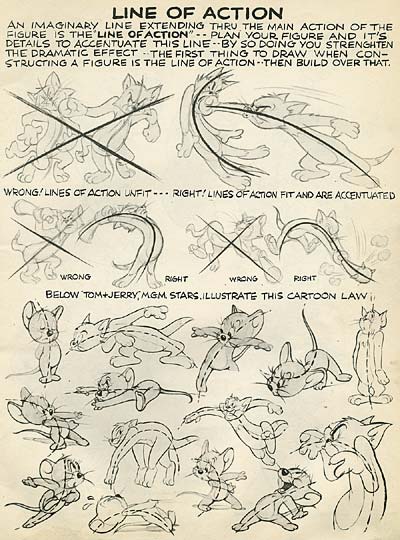 http://johnkstuff.blogspot.com/2006/05/animation-school-lesson-5-line-of.html
CONTRASTS
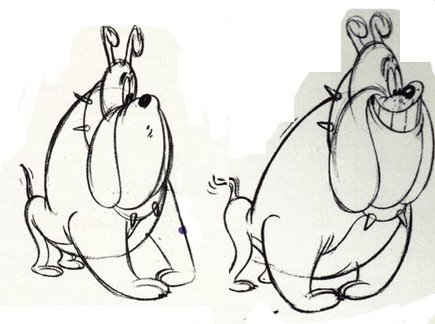
Where a lot of beginning artists have trouble working on my cartoons is that they tend to tone down everything and make the drawings less exaggerated than what I give them. An understand of contrasts is essential to maintaining the guts of a storyboard (if you are drawing layouts) or layout (if you are animating).
 http://johnkstuff.blogspot.com/2006/06/animation-school-8-proportions-affect.html
Contrasts work with hierarchy to make the point of a visual obvious to the audience. Toning down the contrasts make the drawings mushy and vague.
Well you can find lots and lots of cartooning lessons at my curriculum blog and many of you already have.
 http://johnkcurriculum.blogspot.com/2009/12/preston-blair-lessons-fundamentals-of.html
Thanks to all those who donated last year - I can't believe I went a whole year without posting names! I apologize profusely, I think it was because I had too many jobs at once and was quite distracted.
so...THANK YOU!
 http://johnkstuff.blogspot.com/2006/06/animation-school-8-proportions-affect.html
Contrasts work with hierarchy to make the point of a visual obvious to the audience. Toning down the contrasts make the drawings mushy and vague.
Well you can find lots and lots of cartooning lessons at my curriculum blog and many of you already have.
 http://johnkcurriculum.blogspot.com/2009/12/preston-blair-lessons-fundamentals-of.html
Thanks to all those who donated last year - I can't believe I went a whole year without posting names! I apologize profusely, I think it was because I had too many jobs at once and was quite distracted.
so...THANK YOU!
Du tac au tac avec Goscinny & Uderzo - YouTube
En Francia se solía hacer este tipo de programas de TV donde invitaban a dibujantes para que hagan diferentes juegos y muestren un poco de su habilidad.
En este caso, dos pares de autores (escritor-dibujante) cuentan una historia sin saber bien de que se trata lo que viene antes que ellos.
Divertido de ver para quienes gozamos de este rubro :-)
martes, 10 de enero de 2012
Blambot Comic - Diseño de Logos para comics y strips
Si no sabes cómo diseñar tu logo para tu producto, entonces éste es un buen sitio de consulta para inspirarse en excelentes diseños.
Blambot Comic - Artículos
La sección de artículos de este sitio tan conocido que habla y ayuda a ser mejor dibujante.
No te puedes perder esta lectura (en inglés)
Formato de Pagina - Comic y Strips
Detalla el formato de página para comic y comic strips. Recomendadísimo!
lunes, 9 de enero de 2012
D R E W • F R I E D M A N: The Movie Comedy Poster Art of Frank Frazetta
Dos excelentes recomendaciones para ver posters de películas viejas dibujadas por un grande.
Este de Dick Van Dike
Y comedias en general
D R E W • F R I E D M A N: The Movie Comedy Poster Art of Frank FrazettaImperdibles!
Suscribirse a:
Entradas (Atom)